

Entering
How do you tell a genuine placement-linked course from a certificate mill?
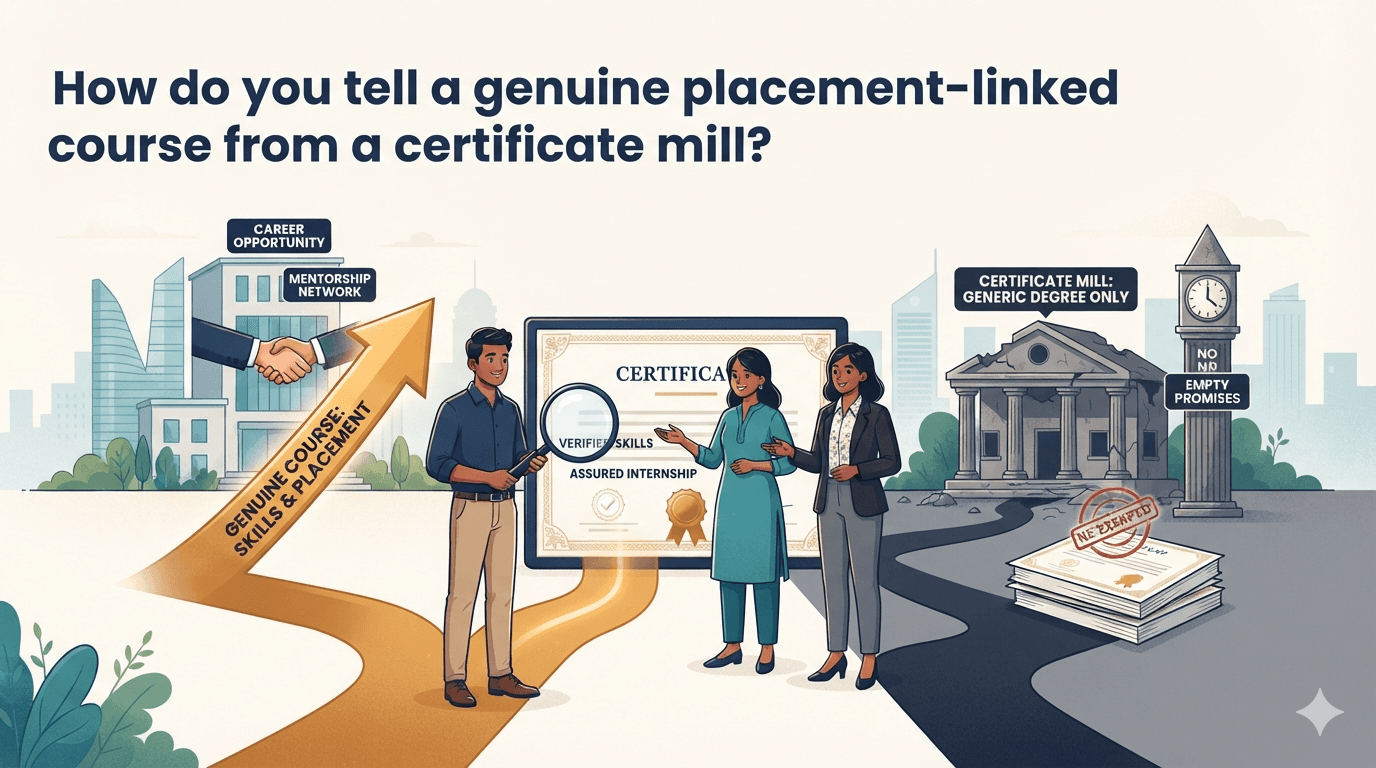
Ask three things before you pay a rupee: can they show you real placement data, is the fee structure transparent, and who is actually hiring their graduates. A certificate mill will dodge all three. A genuine placement-linked course answers without hesitation.
Ask for placement data you can verify
Any institute can claim a 95% placement rate. The number means nothing without a source. Ask for the actual list — company names, role titles, and the batch or year each placement happened in. A real placement cell will show you LinkedIn profiles of past students or connect you with two or three alumni directly. If they only offer a glossy brochure with logos and no names attached to outcomes, that is a red flag. Logos on a slide cost nothing; a named alumnus who picks up your call is proof.
Read the fee structure closely
Certificate mills front-load the fee and back-load the promises. If you are asked to pay the full course fee upfront with placement support described only as assistance rather than a defined process, you are paying for a certificate, not an outcome. Genuine placement-linked programs usually structure fees around milestones: a smaller amount to start, with the rest tied to completing mock interviews, resume rounds, or actually appearing for company drives. Some also work on deferred-fee or income-share models. Ask directly what happens to your fee if you are not placed. A mill has no good answer to that question.
Check who is actually hiring, not just training
The gap between training you and placing you is where certificate mills live. Ask for the names of hiring partners and confirm independently — a quick look at the careers page of that company, or a message to someone who works there, tells you fast whether the partnership is real or just a logo on a website. A genuine program will also tell you honestly which roles and salary bands are realistic for freshers, instead of quoting the highest outlier package as if it is typical.
Look at the curriculum, not just the certificate
A certificate mill sells the certificate as the product. A real placement-linked course treats the certificate as a byproduct of the skill you actually built. Ask to see the syllabus in detail — is it built around what BFSI recruiters actually test, such as product knowledge, compliance basics, communication, and numerical aptitude, or is it generic filler with no industry input. Sit in on a demo class if they allow it. You will know within twenty minutes whether the trainer has actually worked in the industry or is reading off slides.
Talk to alumni directly
This is the single best filter. Ask the institute for two or three recent graduates and actually call them. Ask what they are earning now, how long it took to get placed, and whether the process matched what was promised at admission. A confident institute connects you readily. One that stalls, offers only written testimonials on its website, or gives you contacts who never respond, has told you everything you need to know.
None of this takes more than a couple of days to check, and it is worth doing before you commit months and money to any program, including ours. Ask us for our placement data and alumni contacts the same way you would ask anyone else. If we cannot back it up, do not enrol.
Related questions
What placement rate is actually realistic for a BFSI training course?
For freshers, a genuine program typically places 60 to 80 percent of job-ready candidates within 3 to 6 months of completion, not the 95 to 100 percent many mills advertise. Ask how placed is defined — an interview call does not count, an offer letter does.
Should I pay the full course fee before placement or after?
Be cautious of any program demanding full payment upfront with vague placement language. Look for milestone-based fee structures, refund clauses tied to non-placement, or deferred and income-share fee models.
How do I verify a hiring partner is real and not just a logo on a website?
Search the careers or campus-hiring page of that company for the institute name, or message an employee directly on a professional network. A genuine hiring partnership shows up on both sides, not only in the institute marketing material.
Keep reading
Is BFSI training worth it? Online or classroom BFSI training — which one actually gets people placed? Is a paid BFSI programme worth it when free courses exist on YouTube?Want a structured path into a BFSI role?
See the program built for candidates making exactly this move — a live-online or classroom certification, with a dedicated placement drive.